Wax Melt Clamshells and the CLP Labels They Need
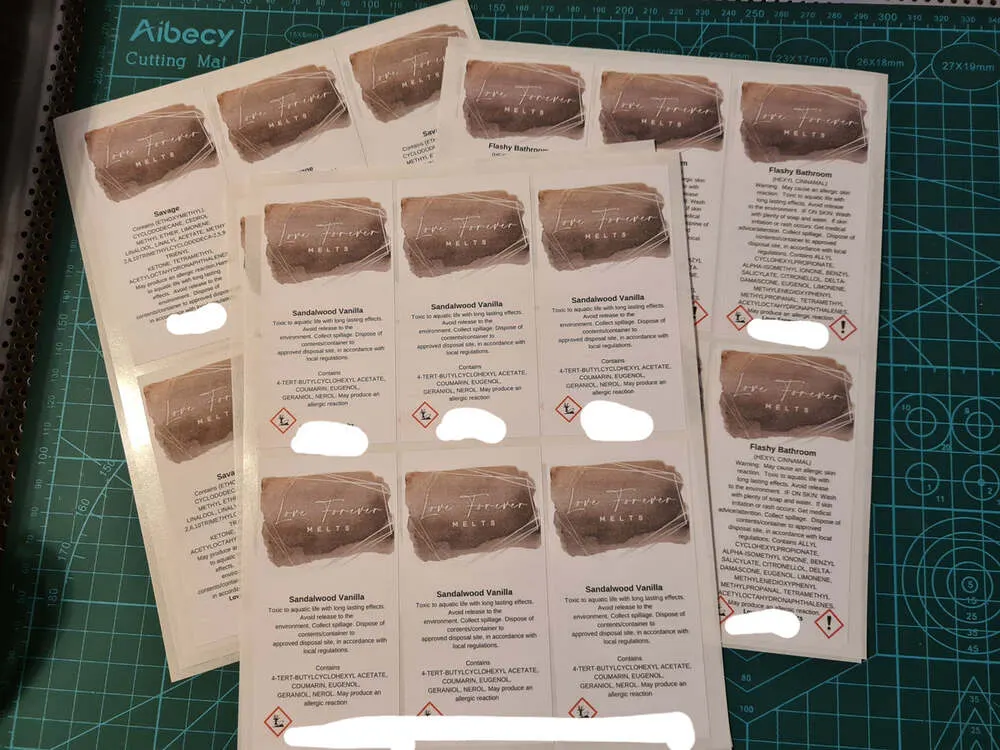
Wax melt clamshells are the clear, hinged plastic packs that hold snap bars, cubes and shapes. Most makers use them because they show the product, keep scent in and stack neatly on a shelf. A clamshell is also a sealed retail pack, which means the legal label has to go on it before it is sold in the UK.
This page covers the sizes you will meet, how much wax each one holds, and where a CLP label sits on the pack.
Wax melt clamshells: common sizes and capacity
There is no single standard, but a few formats dominate. A typical six-cavity clamshell measures roughly 11 cm by 11 cm and holds around 70 to 90 g of wax. A larger rectangular pack with eight to ten cavities can hold 100 to 120 g.
Two things change the real capacity. Cavity depth matters, and so does how full you pour. A shallow cavity filled to the brim can still look neat, but a deep one needs more wax for the same look.
- Small square, 6 cavities, about 70 to 90 g
- Rectangular, 8 cavities, about 90 to 110 g
- Large heart or shape packs, 4 to 6 pieces, about 60 to 100 g
Weigh a finished pack before you fix the weight on the label. Measure three or four, because pours vary by a few grams.
Clamshell packaging for wax melts: what to check before buying
Look at the lid first. A flat, smooth lid area of at least 6 cm by 4 cm gives you space for a label without it wrapping over a curved edge. Ridges and embossed logos make stickers lift within weeks.
Next, check the hinge and the closing tabs. A weak snap lets scent escape and the lid pop open in transit. Test a sample by dropping a packed shell from about 1 metre onto a hard floor.
Clarity is a matter of taste, but I prefer fully clear shells over tinted ones. Customers judge colour by eye, and tint hides it.
Which label goes on a wax clamshell
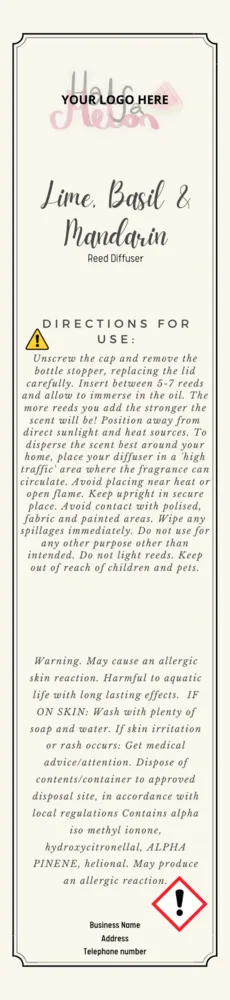
Under UK CLP rules, a scented wax melt that contains hazardous ingredients needs a label with the product identifier, the supplier name and address, the hazard pictogram, the signal word, hazard and precautionary statements, and the nominal quantity. Your safety assessment decides the exact wording, so the label must follow it.
Most makers print the details on a small rectangle and fix it to the back or the base. Standard CLP labels come in set sizes, and a clamshell base usually takes a rectangle around 50 mm by 30 mm or a square near 40 mm. The text must stay legible, so check that the smallest line is readable at arm's length.
If you sell through discount chains, sections on the box or tray can be tighter. Labels cut for a home and bargain style box section suit narrow spaces better than a square does.
Square or rectangle?
A square suits a six-cavity shell with a flat base. Standard clp labels in a square format fit neatly there and leave room around the edge. Rectangles are better when your warning text is long, because the extra width avoids tiny type. Many sellers choose clp labels for wax melts in rectangle form for exactly that reason.
Fitting the label so it stays put
Clean the plastic with isopropyl alcohol and let it dry for a minute. Oils from the wax leave a film that stops adhesive bonding. Press the label down from the centre outwards and hold for about 10 seconds.
Waterproof or gloss laminated labels cope best with fragrance oil. Plain paper stock can stain at the edges within a few days. If you ship in hot weather, test a finished pack in a warm room at around 30 degrees for 48 hours.
Keep a spare label on a separate small sheet for the outer box if you use one. Some sellers also add a batch code, which makes recalls simpler.
Frequently Asked Questions
How many wax melts fit in a standard clamshell?
A common six-cavity shell holds six melts, usually 70 to 90 g in total. Larger shells take eight or ten smaller pieces. Always weigh the finished pack and use that figure on the label.
Do wax melt clamshells need a CLP label?
If the wax contains ingredients classed as hazardous, yes. The label has to be on the pack that reaches the buyer, so a clamshell needs its own. A fragrance supplier's safety data sheet will show how the mixture is classified.
Where should the label go on a clamshell?
The base or the back of the lid is the usual spot, because both are flat. Avoid hinges and curved corners. Keep the front clear so the wax stays visible.
Why do labels peel off clamshells?
Fragrance oil on the surface is the usual cause, followed by textured plastic. Wipe the area with alcohol, press firmly and choose a label with a strong permanent adhesive. A laminated finish helps too.