10% CLP Labels for Wax Melts & Sizzlers & Carpet Fresheners RECTANGLES
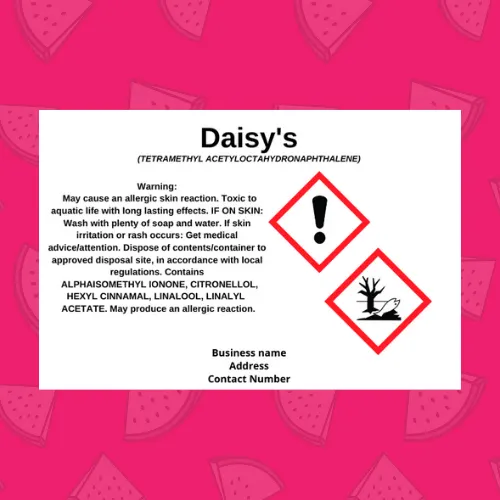
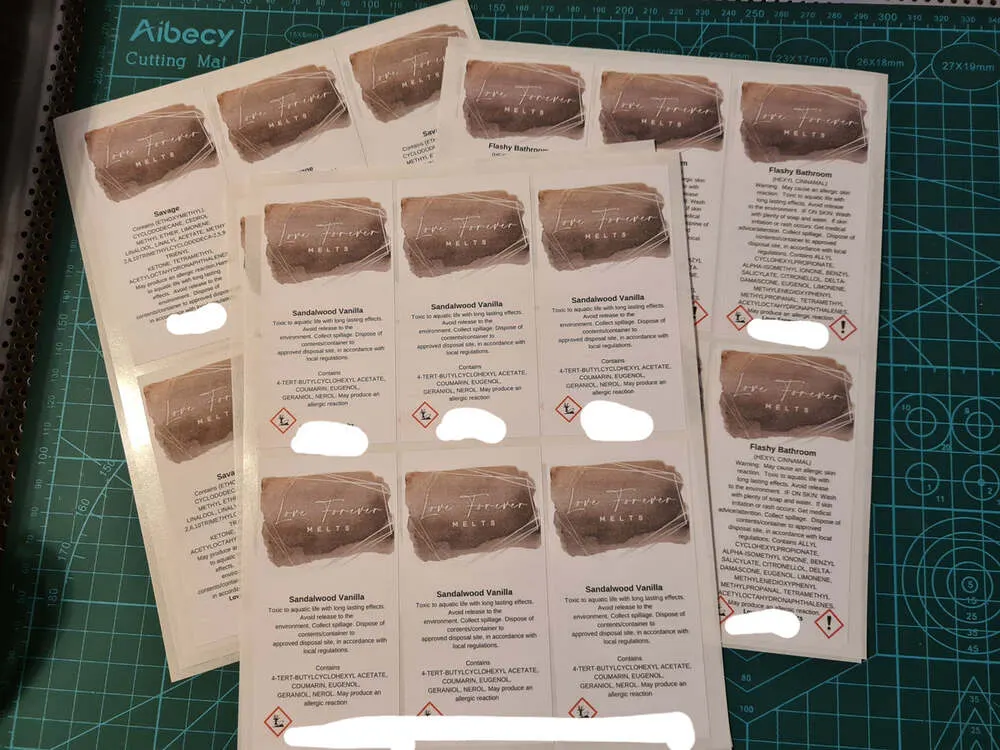
Rectangle CLP labels suit any wax melt box, clamshell or sleeve that has a flat panel wider than it is tall. Most clamshell packs for melts have a back panel of roughly 60 x 40 mm, and that is where a rectangular hazard label sits best. This guide covers sizes, content and placement for sizzlers, melts and carpet fresheners.
When a rectangle label is the right shape
Square labels work on small tubs and pots. Circles suit lids and jar tops. A rectangle wins when the pack is a box, a window carton or a flat pouch, because the text runs in longer lines and stays readable at a small type size.
A rectangle also copes better with a full CLP block. Product identifier, signal word, pictograms, hazard statements and supplier details all need room, and a landscape layout lets the pictograms sit in a row beside the text instead of stacking above it.
If your packs are mixed, you may end up using more than one shape. Square clp labels and round clp stickers follow the same content rules, only the layout changes.
Common rectangle sizes for wax melt packs
There is no legal size for the label as a whole. What the rules fix is the pictogram, which must be at least 10 x 10 mm and ideally larger when the pack is bigger. In practice the sizes below are the ones most makers choose.
- 50 x 30 mm for small sachets and single sizzlers
- 60 x 40 mm for standard clamshells
- 70 x 50 mm for larger boxes with several pictograms
- 90 x 55 mm for carpet freshener tubs and bigger cartons
Measure the flat area first. A label that wraps over a clamshell hinge or a curved edge will lift within weeks, so keep it fully on one panel.
What a CLP label for wax melts must show
If the melt is classified as hazardous under the CLP Regulation, the label needs a defined set of elements. Missing one of them is the most common mistake on small-batch packaging.
- Product identifier, such as the name and the fragrance
- Hazard pictogram or pictograms, usually the exclamation mark or the environment symbol
- Signal word, either Warning or Danger
- Hazard and precautionary statements that match your safety data
- Name and contact details of the supplier
- Nominal quantity, for packs sold to the public
The statements come from your fragrance supplier's safety data sheet and from the final concentration in the wax. Do not copy them from another maker. Two melts with different fragrance oils can need entirely different wording.
The 10% label and what it means
Labels sold as "10%" are usually written for a fragrance load of about 10% by weight, a common level for melts. If you pour at 6% or at 12%, the classification may change, so check the calculation against your own recipe before you print a batch of 500.
Sizzlers and carpet fresheners are often scented more heavily than candles. That alone can push a product into a hazard category that a candle of the same oil would avoid.
Retail boxes and the home and bargain format
Some retailers ask for labels that fit a set box section. Makers supplying home and bargain style display boxes tend to need a rectangle sized to the printed section of the carton, often around 60 x 35 mm, so the label does not cover barcodes or branding. Ask the buyer for the artwork template before ordering any print run.
Material and finish
Wax melt packs are often stored cool, then handled with oily fingers. A matt or gloss white vinyl with a permanent adhesive holds up better than plain paper. Black text on white gives the best contrast, and the red diamond border on pictograms must stay red with a white inside.
Apply labels at room temperature, around 18 to 22 °C, and press for a few seconds. Cold plastic stops the adhesive from gripping.
Frequently Asked Questions
What size should a rectangle CLP label be?
Pick the largest size that fits flat on your pack. The only fixed measure is the pictogram, at least 10 x 10 mm. For a standard clamshell, about 60 x 40 mm is a sensible choice.
Can I put the label on the inside of the packaging?
No. The label must be visible on the outer packaging that the buyer sees. If the pack is clear, a label on the inside face can work only if it stays fully readable from outside.
Do all wax melts need a CLP label?
Only those classified as hazardous after you assess the mixture. Many scented melts are, because of the fragrance oil. Always base the decision on the safety data and your actual fragrance percentage.
Can one label cover several scents?
Only if the hazard information is identical for each. Otherwise use a separate label per fragrance, or a blank area where the product name is added.